

Productspecificaties
Brand | Cartier
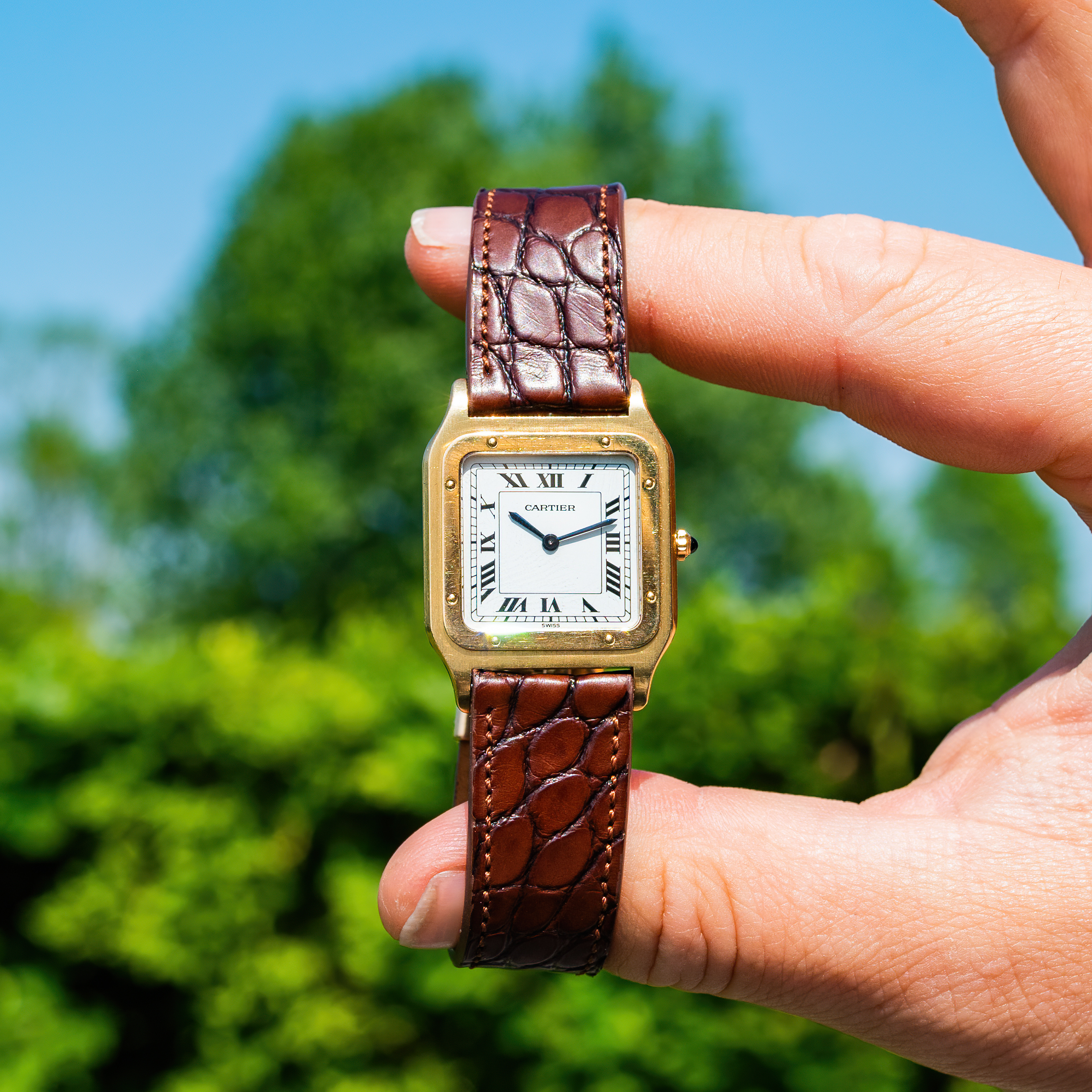
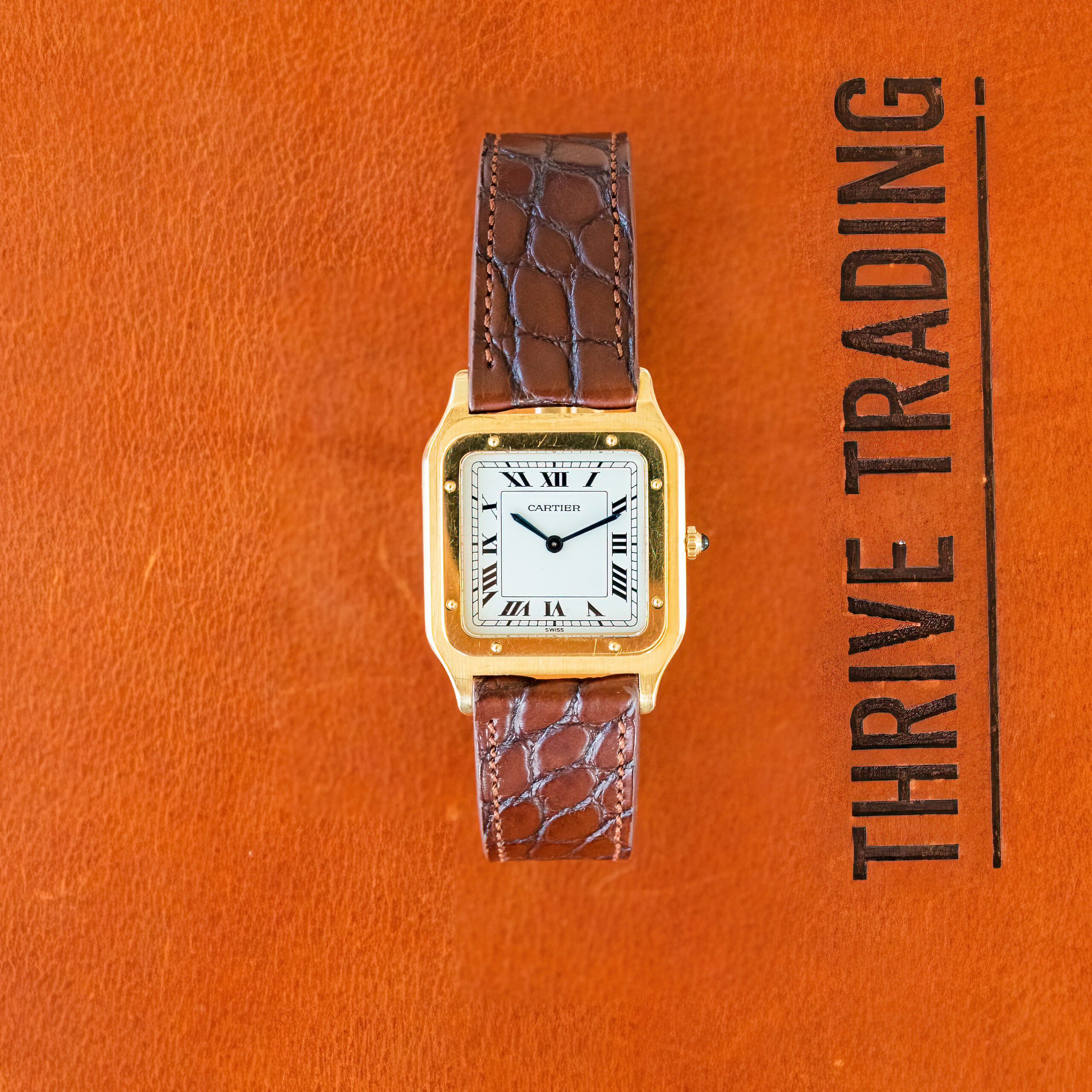
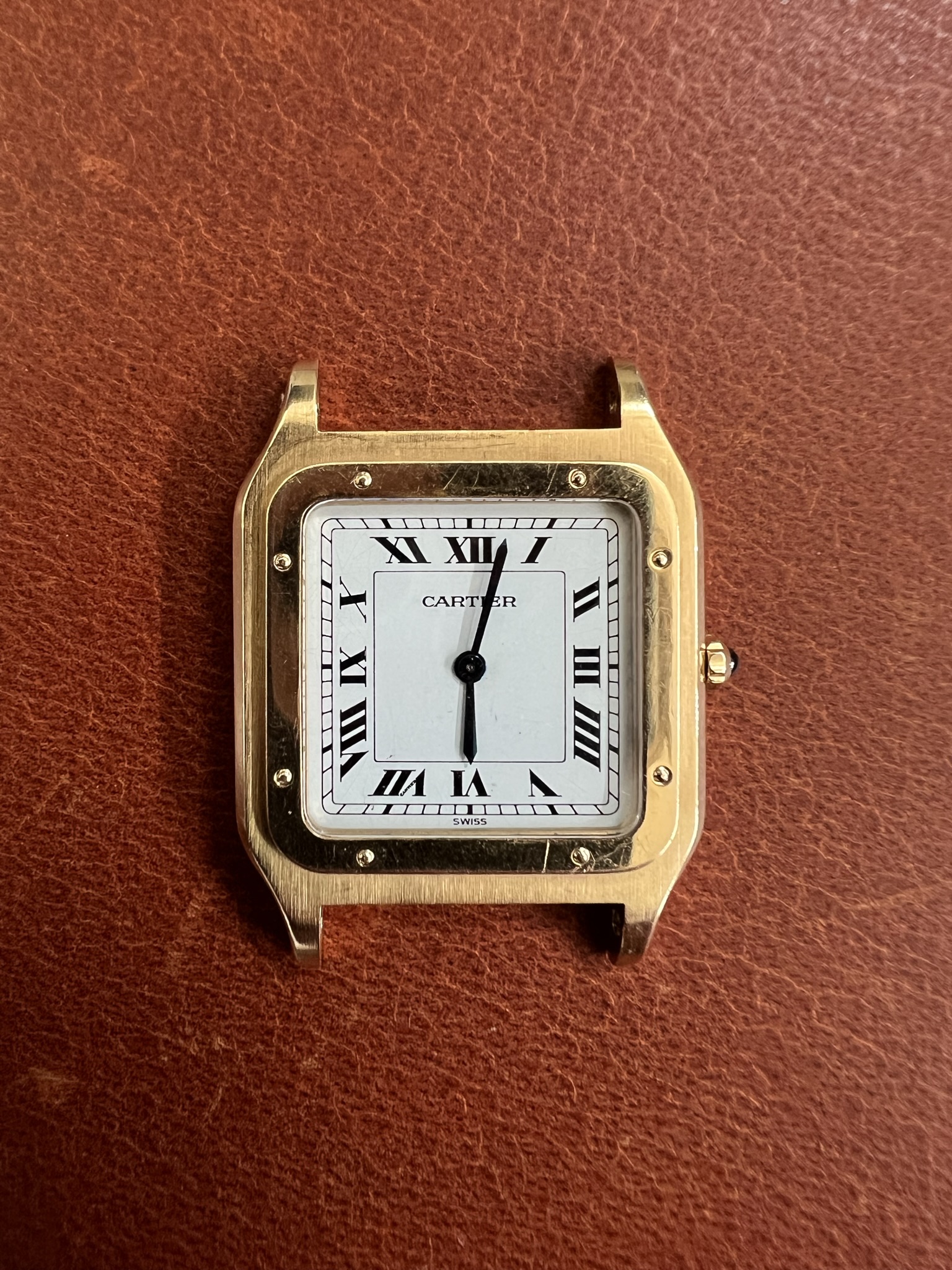
Type | Santos ultra-thin Manuel wind
Dimension | 36mm height X 27mm Width; 4.3MM thickness
Reference | 9605
Alberto Santos-Dumont was a practical man, he just wanted things to work. The aviator from Brazil kept running into one particular thing that did not work for his needs. While flying, he found his pocket watch unreliable and impractical. Santos-Dumont enlisted the help of a friend by the name of Louis Cartier. So Mr. Cartier went to work designing a watch for Alberto’s wrist that was flat and had a square bezel. That first example was manufactured as a one-off piece, a common occurrence for the house of Cartier at the time, and given to Santos-Dumont. Quickly, more and more customers walked through the Maison’s doors demanding a similar wristwatch and, in 1911, the Cartier Santos-Dumont was officially named and offered as the first mass-produced wristwatch.
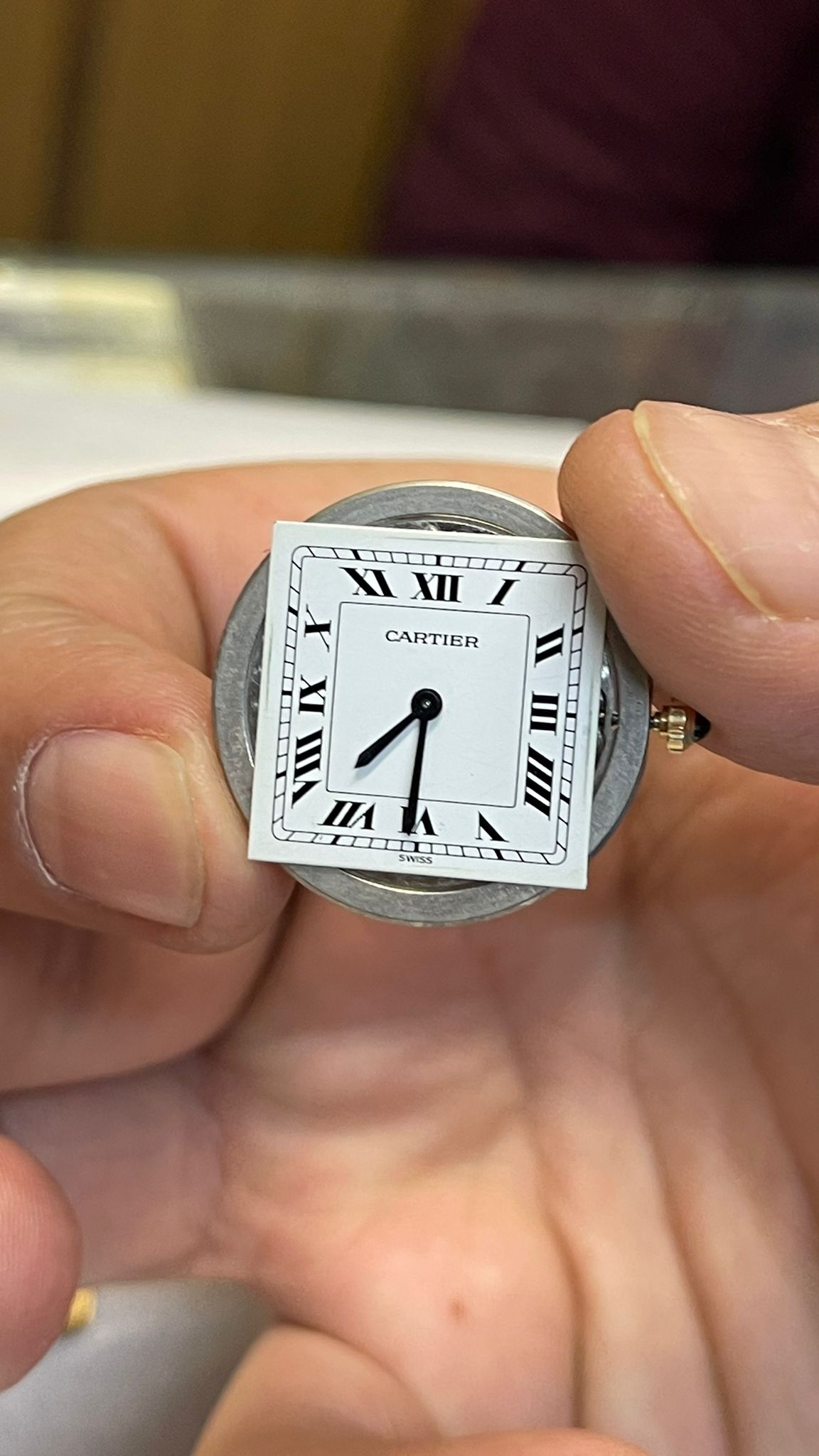
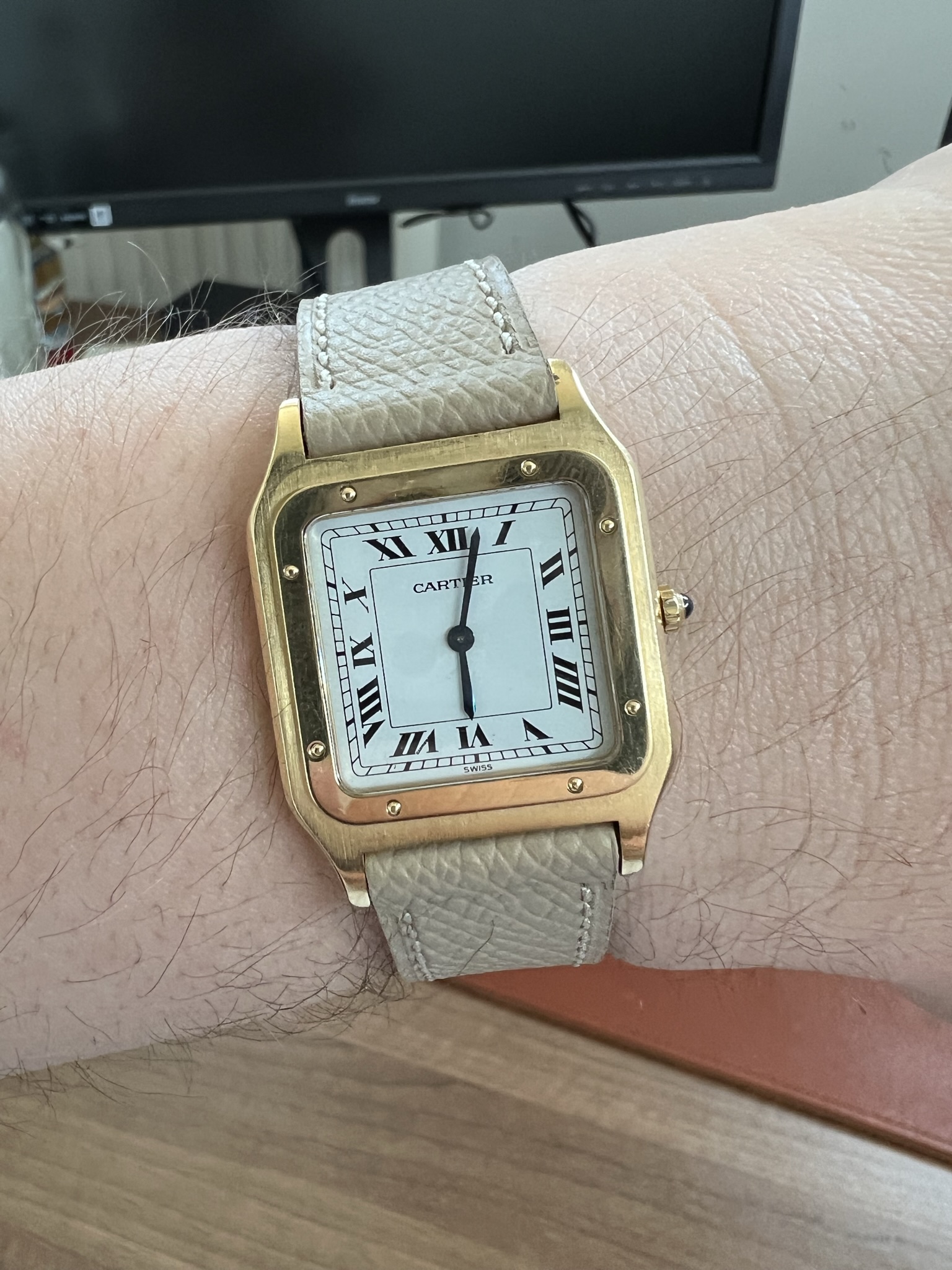
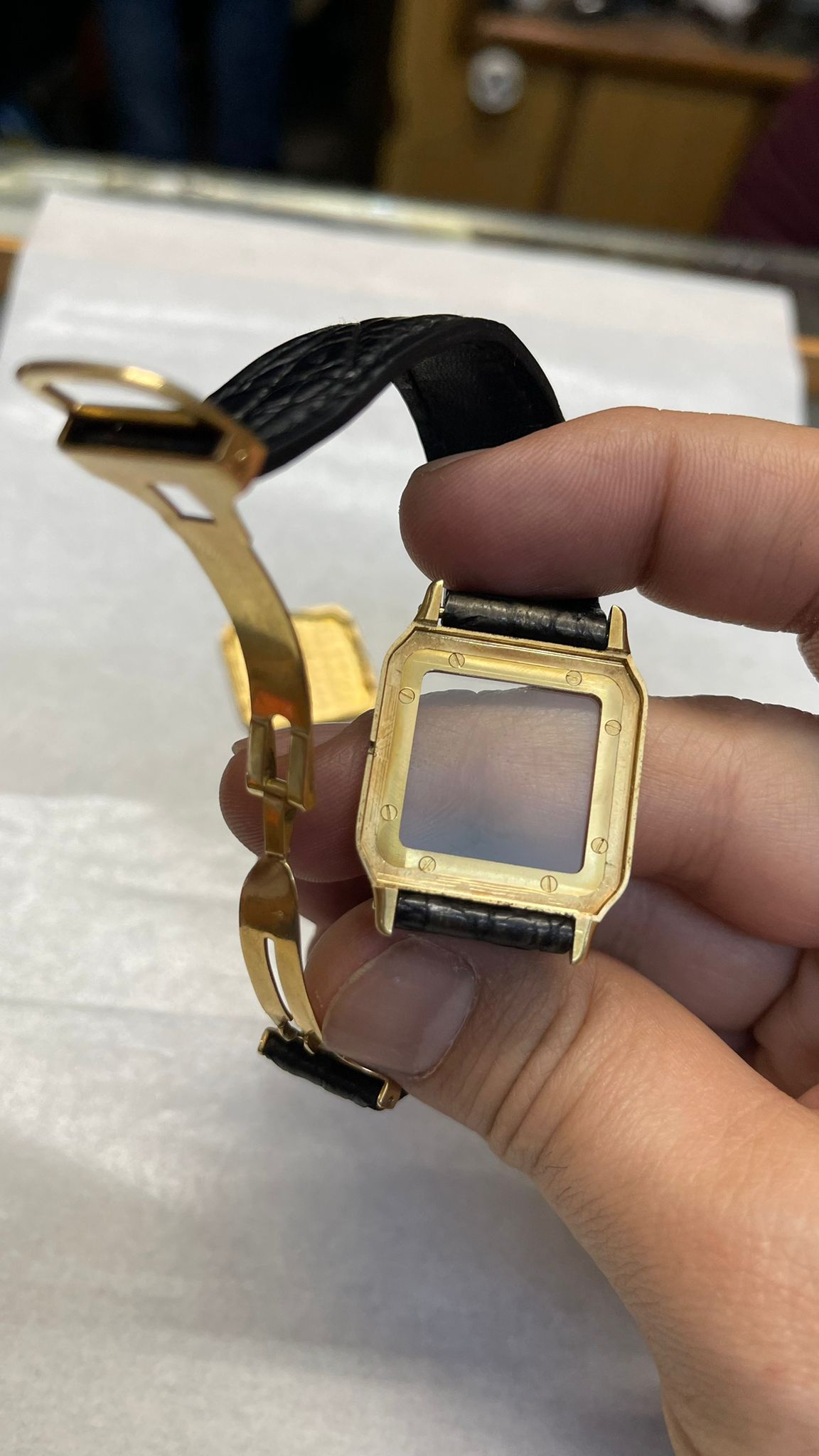
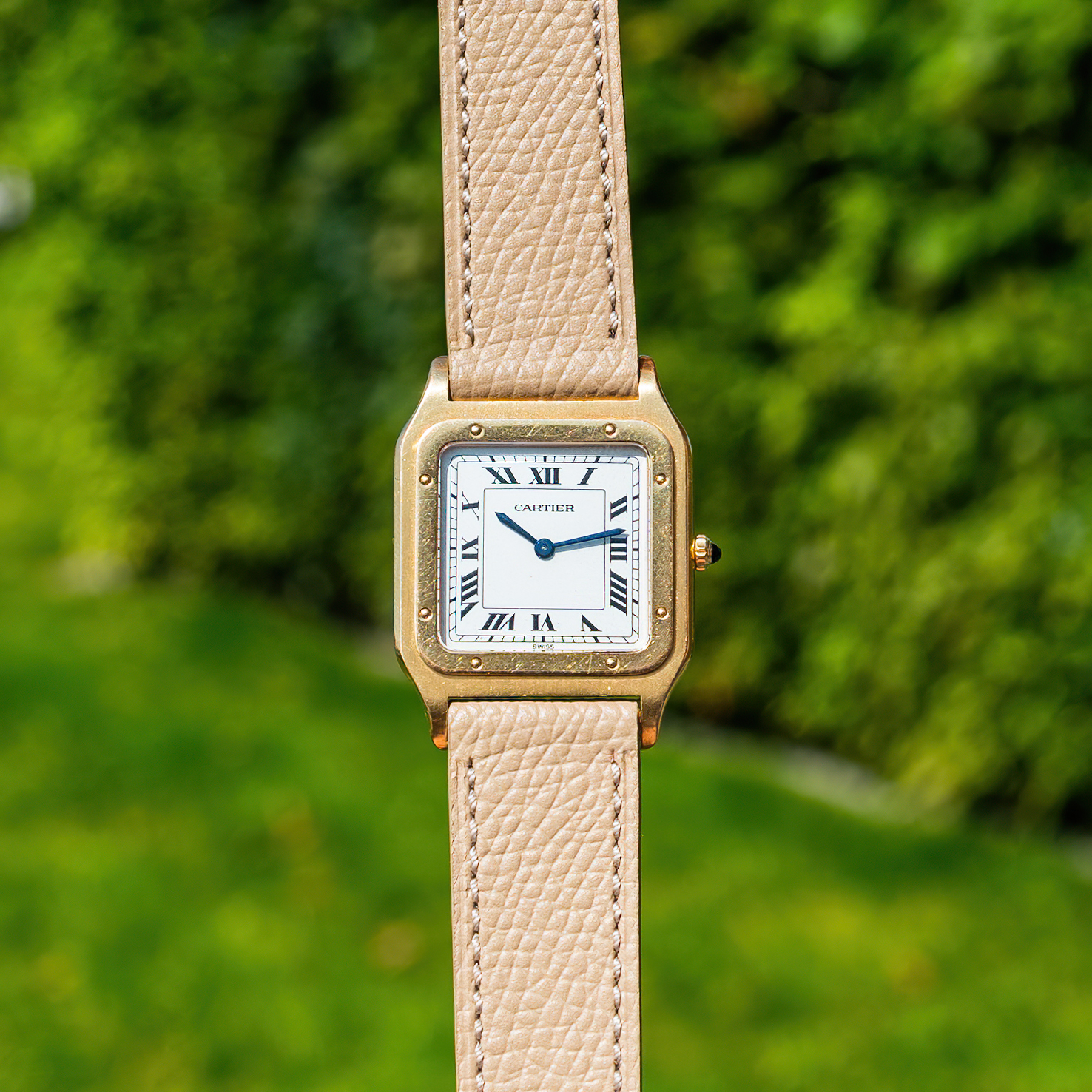
The Cartier Santos-Dumont, or simply the “Santos,” has consistently been designed with a square shaped case and a bezel fitted with screws or screw mimicking indentations. On the original watch, bezel screws secured the crystal into the case and were designed to, along with the bezel, mimic the legs of the Eiffel Tower. The screws started as functional but became more design focused after early Santos generations. The dial is most often seen in white with black Roman numeral hour markers laid out in a radial fashion, originally to mimic the radial layout of the streets of Paris.
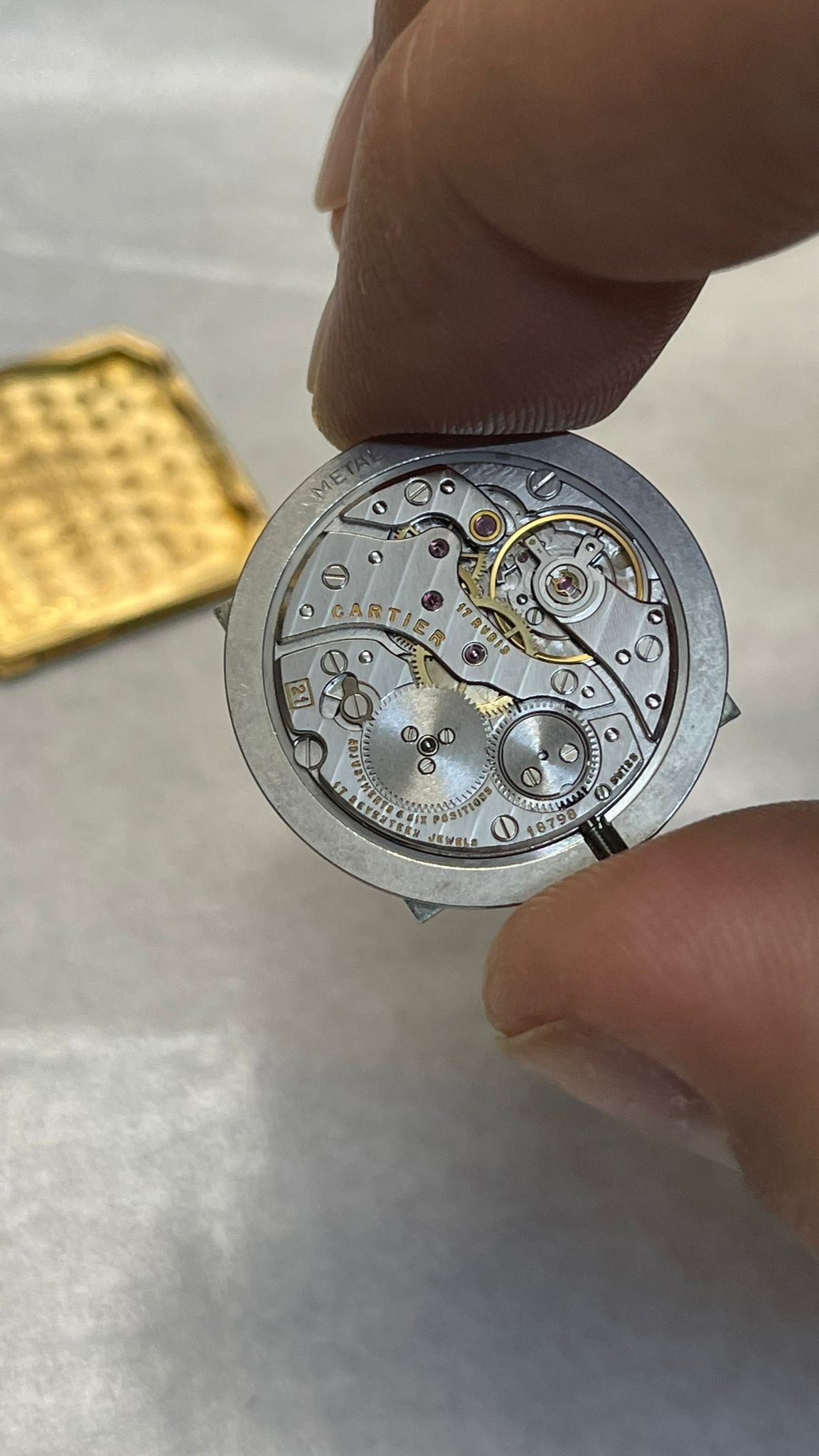
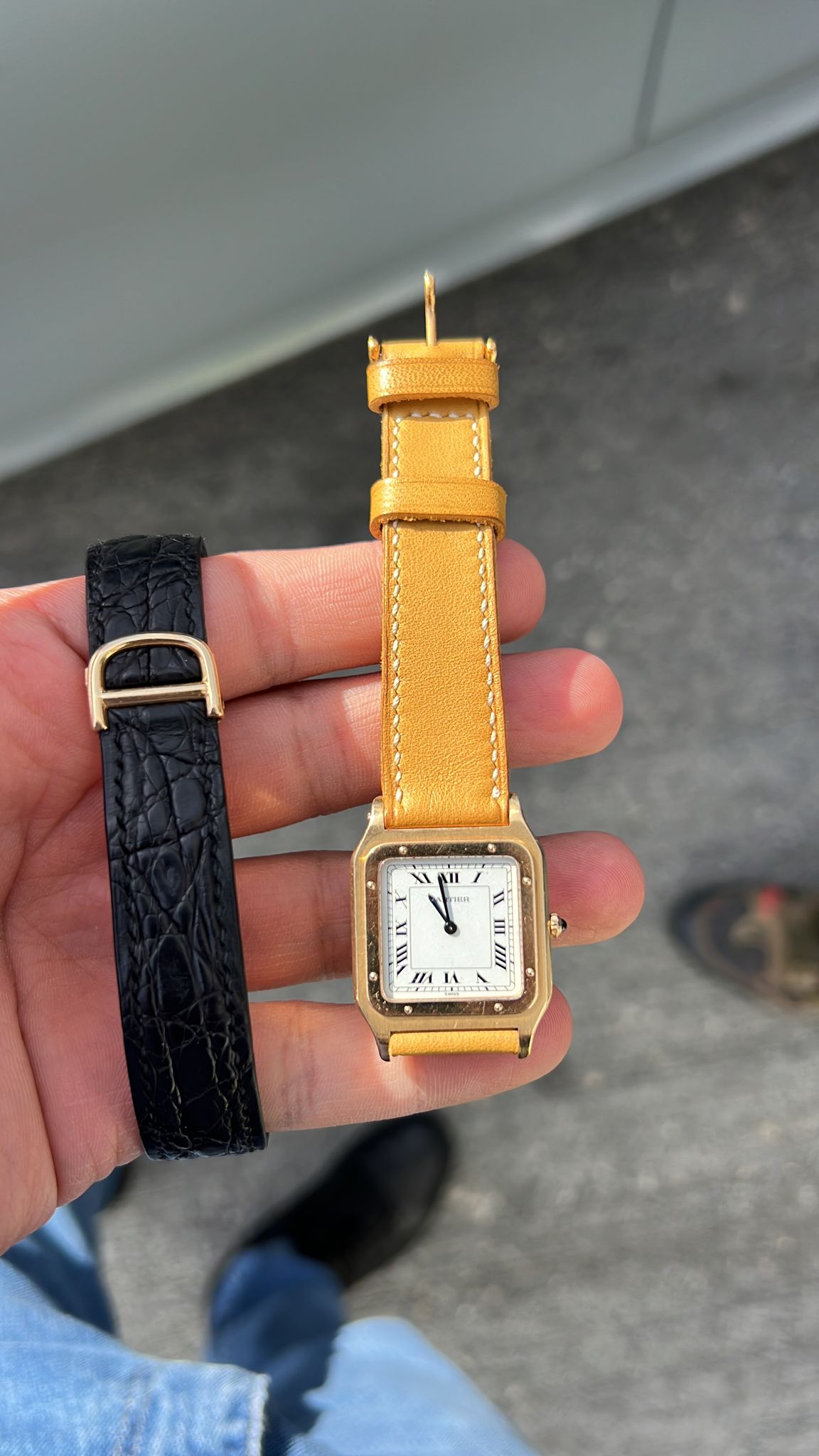
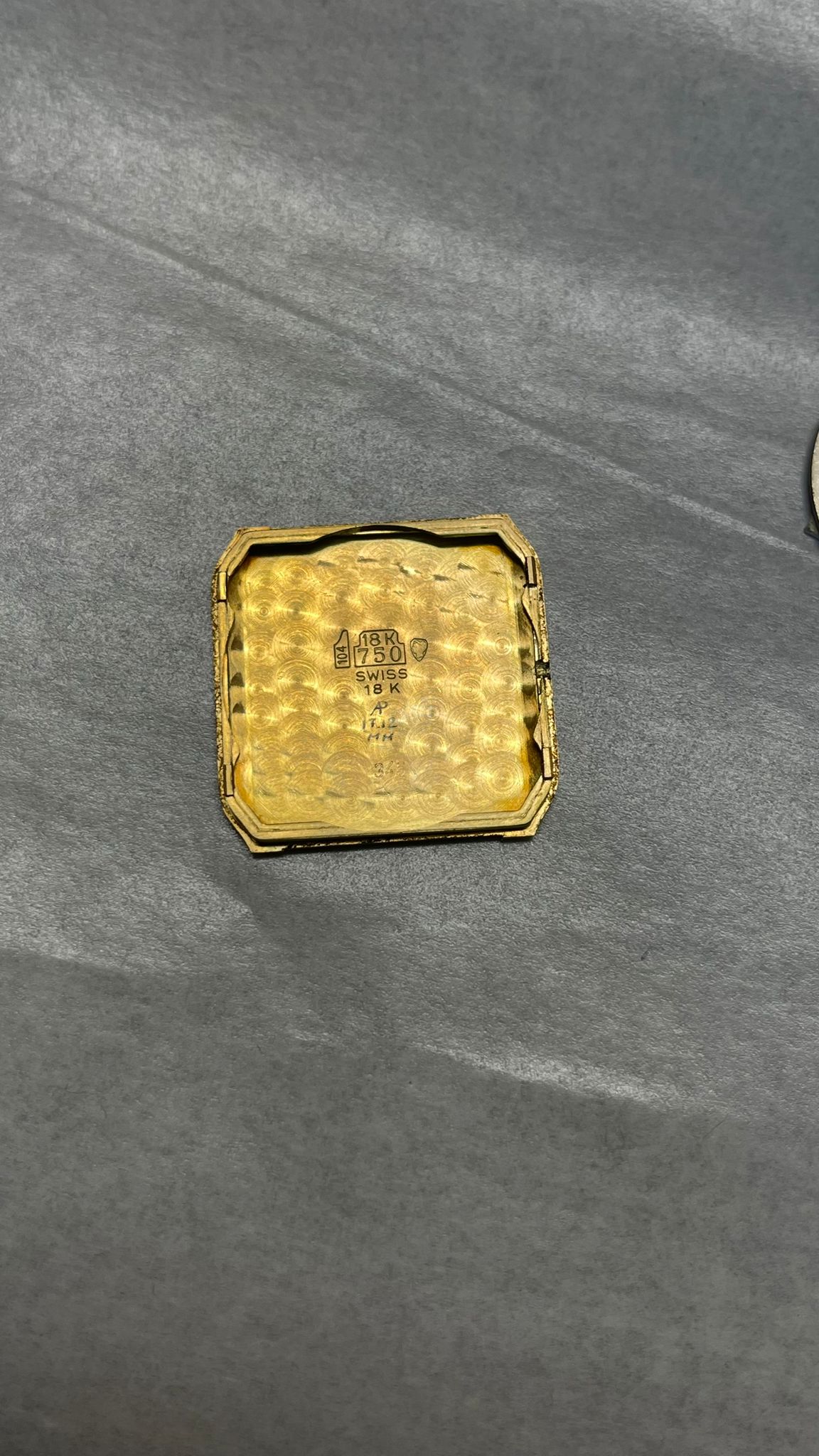
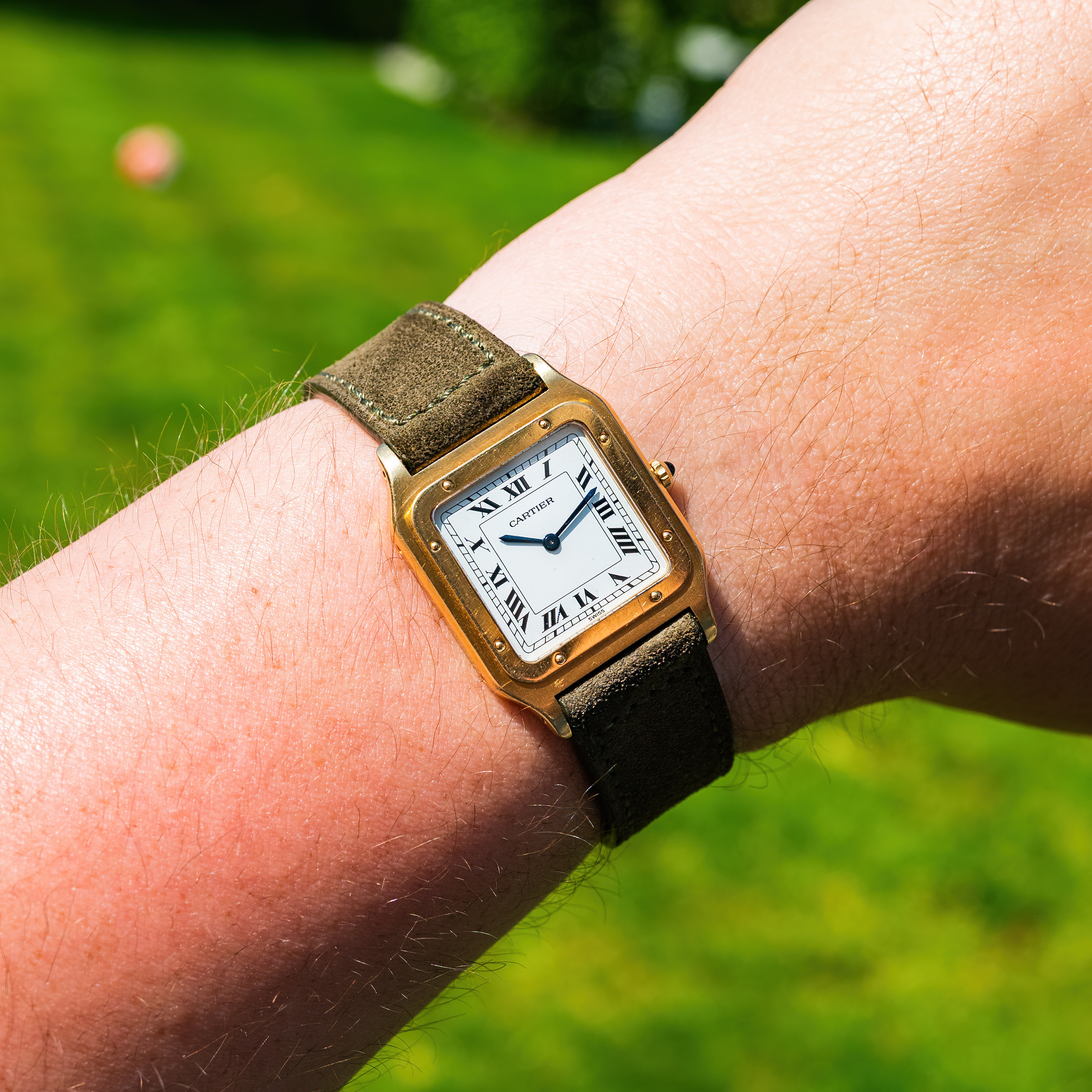
This example of the Cartier Santos-Dumont is dated to the 1980s and measures 36mm by 27mm, height by width. Although the proportions of the Santos really never changed, Cartier changed the sizing often. The most notable dimension here is the 4.3mm thickness, about 2mm thinner than the standard Santos, thanks, in part, to the Cartier signed Piguet caliber 21 “ultra-thin” movement inside.
Alberto Santos-Dumont was a practical man, he just wanted things to work. The aviator from Brazil kept running into one particular thing that did not work for his needs. While flying, he found his pocket watch unreliable and impractical. Santos-Dumont enlisted the help of a friend by the name of Louis Cartier.
So Mr. Cartier went to work designing a watch for Alberto’s wrist that was flat and had a square bezel. That first example was manufactured as a one-off piece, a common occurrence for the house of Cartier at the time, and given to Santos-Dumont. Quickly, more and more customers walked through the Maison’s doors demanding a similar wristwatch and, in 1911, the Cartier Santos-Dumont was officially named and offered as the first mass-produced wristwatch.
The Cartier Santos-Dumont, or simply the “Santos,” has consistently been designed with a square shaped case and a bezel fitted with screws or screw mimicking indentations. On the original watch, bezel screws secured the crystal into the case and were designed to, along with the bezel, mimic the legs of the Eiffel Tower.
The screws started as functional but became more design focused after early Santos generations. The dial is most often seen in white with black Roman numeral hour markers laid out in a radial fashion, originally to mimic the radial layout of the streets of Paris.
" If you’re interested in more details or the price of the product, we’re ready to provide you with all the information."
This item is sold out
Get in touch
At Thrive Trading, we understand that the search for the perfect item is an experience that requires trust and expertise. We are here to assist you in your quest for the ideal watch, designer item, or horse. Contact us today and discover what we can do for you.